
Ransomware can enter through a compromised device or account, encrypt files or steal data, then demand payment. Effective business ransomware protection layers tested, isolated backups with endpoint detection, strict access controls, and network segmentation. The 3-2-1 backup rule adds resilience: keep three copies of data on two types of storage, with one copy offsite.
Ransomware can do more than lock files: an attack may expose sensitive information and spread across connected systems. Understanding how ransomware works helps businesses prepare before disruption begins. This guide explains how backups support recovery, how endpoint detection can flag suspicious activity, and how least-privilege access and network segmentation can limit an attacker’s reach.
Key Takeaways
- Keep critical backups encrypted and separate from the main network, then test that they can support recovery.
- Use endpoint detection and response to spot suspicious activity and contain affected devices before an incident spreads.
- Limit administrator privileges and restrict software installation to reduce the paths attackers can exploit.
- Segment networks to help contain an intrusion, and use security assessments to identify gaps in your defenses.
1. Offline, encrypted backups and disaster recovery testing
For small businesses in 2026, strong ransomware protection combines offline, encrypted backups, endpoint detection, least-privilege access, and network segmentation. No single tool covers every threat; a sound strategy protects recovery copies and limits how attackers move across devices and business operations.
In the United States, ransomware reporting duties may depend on federal, state, or sector-specific rules, as well as the organization, information affected, and incident. Identify the relevant factors promptly and follow applicable reporting and notification requirements. Backup planning alone does not determine legal obligations.
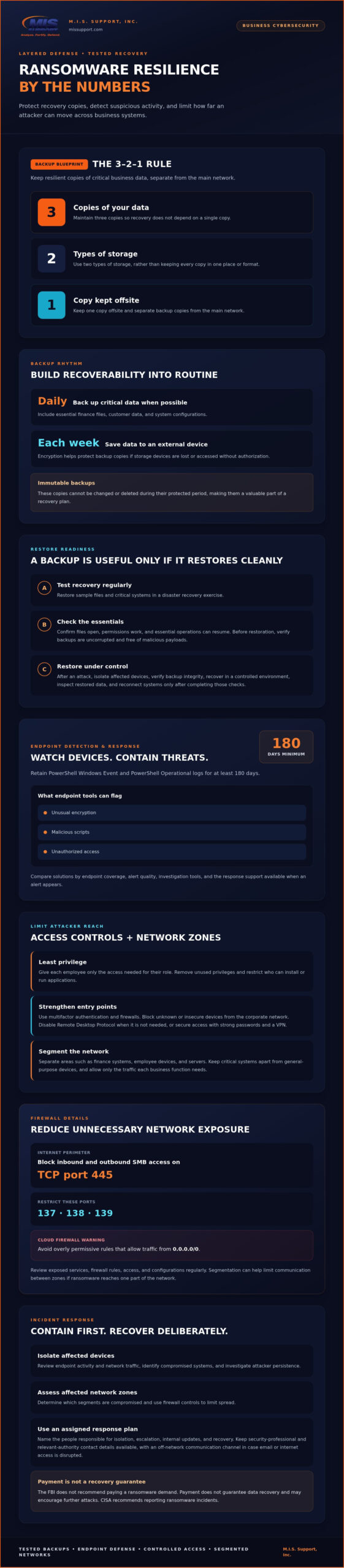
To back up and restore data after an attack, keep offline, encrypted copies separate from the main network, then test recovery before an incident. Use the 3-2-1 rule: maintain three copies on two types of storage, with one copy offsite. Before restoration, verify backups are uncorrupted and free of malicious payloads.
Back up critical data every day when possible, and set aside time each week to save data to an external device. Include essential records, such as finance files, customer data, and system configurations. Encryption helps protect copies if storage devices are lost or accessed without authorization.
Immutable backups cannot be changed or deleted during their protected period, which can make them a valuable part of a recovery plan. Test backups regularly by restoring sample files and critical systems in a disaster recovery exercise. Confirm that files open, permissions work, and essential operations can resume. After an attack, isolate affected devices and verify backup integrity before restoring systems. Recover in a controlled environment, inspect restored data, and reconnect systems only after completing those checks.
2. Endpoint detection and response
Endpoint detection and response tools monitor laptops, servers, and other devices for suspicious behavior. They can flag unusual encryption, malicious scripts, or unauthorized access, helping security teams investigate and contain a threat before it spreads. For small and midsize businesses, compare solutions by their endpoint coverage, alert quality, investigation tools, and the response support available when an alert appears.
Keep useful evidence, too. Organizations should retain PowerShell Windows Event and PowerShell Operational logs for at least 180 days. During an incident, responders can review endpoint activity and network traffic, identify compromised systems, isolate affected devices, and investigate attacker persistence before restoring operations.
A response plan turns preparation into clear, assigned actions. Name the people responsible for isolating systems, escalating cybersecurity incidents, sharing internal updates, and coordinating recovery. Keep contact details for security professionals and relevant authorities readily available, and choose an off-network communication channel in case email or internet access is disrupted. CISA recommends reporting ransomware incidents.
Businesses often ask how much software and services cost. Pricing depends on factors such as the number of endpoints, detection capabilities, and the monitoring and response scope; service pricing is provided after a quote request.
The FBI does not recommend paying a ransomware demand. Payment doesn’t guarantee data recovery and may encourage further attacks. Ransomware insurance may cover direct recovery and system-restoration losses through first-party coverage, and losses suffered by outside parties through third-party coverage.
For a coordinated endpoint defense and response plan, consider endpoint protection and ransomware defense.
3. Least privilege and network segmentation
Useful ransomware defenses include least-privilege accounts, multifactor authentication, firewalls, and network segmentation. Give each employee only the access needed for their role, remove unused privileges, and restrict who can install or run applications. Apply strict policies that block unknown or insecure devices from the corporate network. These controls reduce opportunities for attackers to gain access or move between systems.
Review exposed services and firewall rules regularly. Disable Remote Desktop Protocol when it isn’t needed, or secure access with strong passwords and a VPN. Block inbound and outbound SMB access on TCP port 445 at internet perimeter firewalls, and restrict ports 137, 138, and 139. CISA’s response guidance gives an overly permissive cloud firewall rule allowing traffic from 0.0.0.0/0 as an example to avoid.
Network segmentation divides infrastructure into controlled zones, such as finance systems, employee devices, and servers. If ransomware reaches one segment, firewall rules can limit communication with others and reduce the chance of a wider breach. Keep critical systems separate from general-purpose devices, and allow only the network traffic each business function needs.
Attackers may remain undetected inside a network for weeks, so review access and firewall configurations regularly. During an incident, isolate affected systems, assess which segments are compromised, and use the incident response plan to guide containment. Afterward, update rules and permissions based on the entry point and movement observed.
Strengthen these safeguards with a network security audit that identifies access and segmentation gaps.
Strong access controls, encryption, and network segmentation can reduce the risk of data being exfiltrated during ransomware attacks. Restrict software installation and execution on network devices to limit malware exposure.
M.I.S. Support: Managed Cybersecurity Services
M.I.S. Support helps organizations strengthen ransomware defenses through Managed Cybersecurity Services, including 24/7 Threat Monitoring & Response. Turn to this support when your team needs ongoing threat oversight or a clearer view of weaknesses across its systems.
Internal & External Penetration Testing can reveal exploitable gaps before attackers find them. Cybersecurity Gap Assessments help identify where existing safeguards may fall short, giving your organization practical priorities for strengthening defenses and improving response readiness.
These services complement the measures in this guide: tested backups, endpoint defenses, controlled access, and segmented networks. M.I.S. Support can assess how those protections work together and identify where further attention is needed. Contact M.I.S. Support to discuss your organization’s cybersecurity needs.
Make resilience part of daily operations
Preparedness is not a one-time project. Business ransomware protection stays effective when someone owns the plan, reviews changes to your systems, and turns lessons from security reviews into concrete improvements. Set a clear process for deciding who can approve security changes and who coordinates the next steps if an alert demands action.
M.I.S. Support offers Managed Cybersecurity Services and 24/7 Threat Monitoring & Response to help organizations maintain security oversight. Internal & External Penetration Testing can also help identify weaknesses that deserve attention before they become entry points. The right next step is to assess where your current defenses need stronger oversight or testing.
Contact M.I.S. Support for help turning your security priorities into a practical plan. A deliberate next step can help your organization move forward with greater confidence.
Frequently Asked Questions
How does ransomware work?
Ransomware can gain access through a deceptive email attachment, stolen login credentials, or an exposed service. After entry, attackers may run malicious code, disrupt access to files, and seek access to other systems or sensitive information. For example, a compromised employee account could expose shared business documents. The attack may then demand payment in exchange for a decryptor or a promise not to publish stolen data.
What is ransomware protection?
Ransomware protection is the combination of safeguards and response plans that reduces the chance of an attack disrupting a business. A business ransomware protection program can combine email and endpoint defenses, identity controls, staff awareness, and recovery planning. For example, employees can be trained to report a suspicious attachment, while security tools help investigate the device before the threat reaches shared systems.
Why Are All Businesses Targeted?
Attackers can target organizations of any size, looking for accessible systems, useful data, or accounts they can exploit. Automated campaigns may reach businesses without selecting them individually, while targeted attacks may focus on a company’s suppliers, industry, or valuable records. A small firm with limited security resources may still hold information or provide access that attackers want.
Why Is Data Breach Prevention Important In Ransomware Scenarios?
Preventing data theft matters because encryption is not the only pressure attackers can apply. Stolen employee records, customer files, or contract documents may be used for extortion or exposed publicly. Limiting access to sensitive information and monitoring unusual transfers can reduce what an intruder can take. This can also help the organization understand which records require investigation after an incident.
Why are businesses at risk?
Businesses rely on connected systems for communication, payments, customer records, and daily work. That dependence creates exposure when an employee clicks a convincing message, software remains unpatched, or a supplier account is compromised. Risk also grows when staff have unnecessarily broad access or security decisions lack clear ownership. Mapping important systems and assigning responsibility helps reveal where protective measures need attention.