
What if your biggest cybersecurity gap isn’t a missing tool, but a lack of clear ownership? If you’re asking “what does a virtual ciso do,” you may already know that security alerts and assessment findings matter. The harder part is deciding what to address first, who should own the work, and how leaders will track progress.
A virtual CISO provides strategic security leadership, helping connect risk, compliance, and security decisions without replacing the IT or security staff who handle daily technical work. Your organization gets help setting direction, clarifying responsibilities, and keeping leadership informed, while operations remain with the people and services responsible for execution. This guide explains typical vCISO responsibilities, how the role works alongside existing teams, and signs your organization may need that level of oversight.
Key Takeaways
- Learn what does a virtual ciso do, from setting security priorities to explaining risks to business leaders.
- See which areas a virtual CISO may oversee, including risk assessment, policies, compliance planning, and remediation tracking.
- Understand how strategic oversight can coordinate with internal IT teams and specialist providers without replacing their hands-on work.
- Use a practical evaluation sequence to clarify objectives, assess current capabilities, define responsibilities, and set priorities.
What Does a Virtual CISO Do for a Business?
A virtual CISO provides outsourced cybersecurity leadership and strategic oversight for a business. If you’re asking what does a virtual ciso do, the core answer is that they help set security direction, connect risks to business priorities, and guide decisions about where to focus limited resources.
A Chief Information Security Officer leads an organization’s approach to protecting information and managing security risk. The Chief Information Security Officer role typically connects security strategy with organizational needs. A virtual CISO brings that kind of leadership through an outsourced arrangement, working with business leaders and existing IT or security staff. The exact scope depends on the engagement.
A virtual CISO leads security strategy and oversight; hands-on technical teams operate, configure, and maintain security systems. For example, a virtual CISO may help leaders prioritize a vulnerability assessment finding by considering its business impact, available resources, and remediation owner. Technical staff then carry out the agreed work. Strategic oversight can guide operations, but it doesn’t automatically include every technical service.
How a virtual CISO differs from an in-house CISO
An in-house CISO is a full-time executive within the organization. A virtual CISO provides security leadership through an outsourced, often fractional arrangement. This may suit a business that needs strategic guidance but not a full-time role. Neither model fits every organization; the right choice depends on risk, complexity, resources, and the level of leadership required.
“Virtual” describes the service arrangement, not a lesser standard of oversight or automatic 24/7 availability. Before work begins, clarify the role’s responsibilities, decision-making authority, communication cadence, and escalation expectations. For example, agree on who approves security priorities, who assigns technical work, and how unresolved risks reach leadership. This helps prevent gaps between strategic direction and daily operations.
Which Cybersecurity Responsibilities Does a Virtual CISO Typically Lead?
To understand what does a virtual ciso do in practice, look at the decisions and follow-through they guide. Common areas of oversight include assessing risk, setting security priorities, shaping policies, planning for compliance, and reporting security concerns to leadership. A useful security update should make clear what needs attention, why it matters, who owns the next step, and when progress will be reviewed. Agree on the scope for each engagement, since these responsibilities aren’t automatic inclusions in every service.
A virtual CISO may also coordinate internal IT staff and specialist providers, track agreed remediation work, and bring unresolved risks back to leadership. ISACA’s discussion of Virtual CISO services explores how the role can connect security leadership with organizational needs.
From risk findings to an actionable security plan
Assessment findings become more useful when they lead to clear decisions. For each finding, identify its potential business impact, the person responsible for addressing it, the resources needed, and how progress will be checked. A vulnerability assessment guide can help explain how findings inform priorities. The virtual CISO can coordinate follow-up, while the designated technical team or provider handles the agreed work.
Keep service boundaries clear. Penetration testing, vulnerability assessments, and 24/7 threat monitoring are distinct technical services, not automatic parts of virtual CISO leadership. Ask which services are included, what deliverables to expect, and who will perform any technical work. Businesses can explore M.I.S. Support virtual CISO services alongside existing IT and cybersecurity operations, then clarify responsibilities and deliverables before proceeding.
When Should a Business Consider a Virtual CISO?
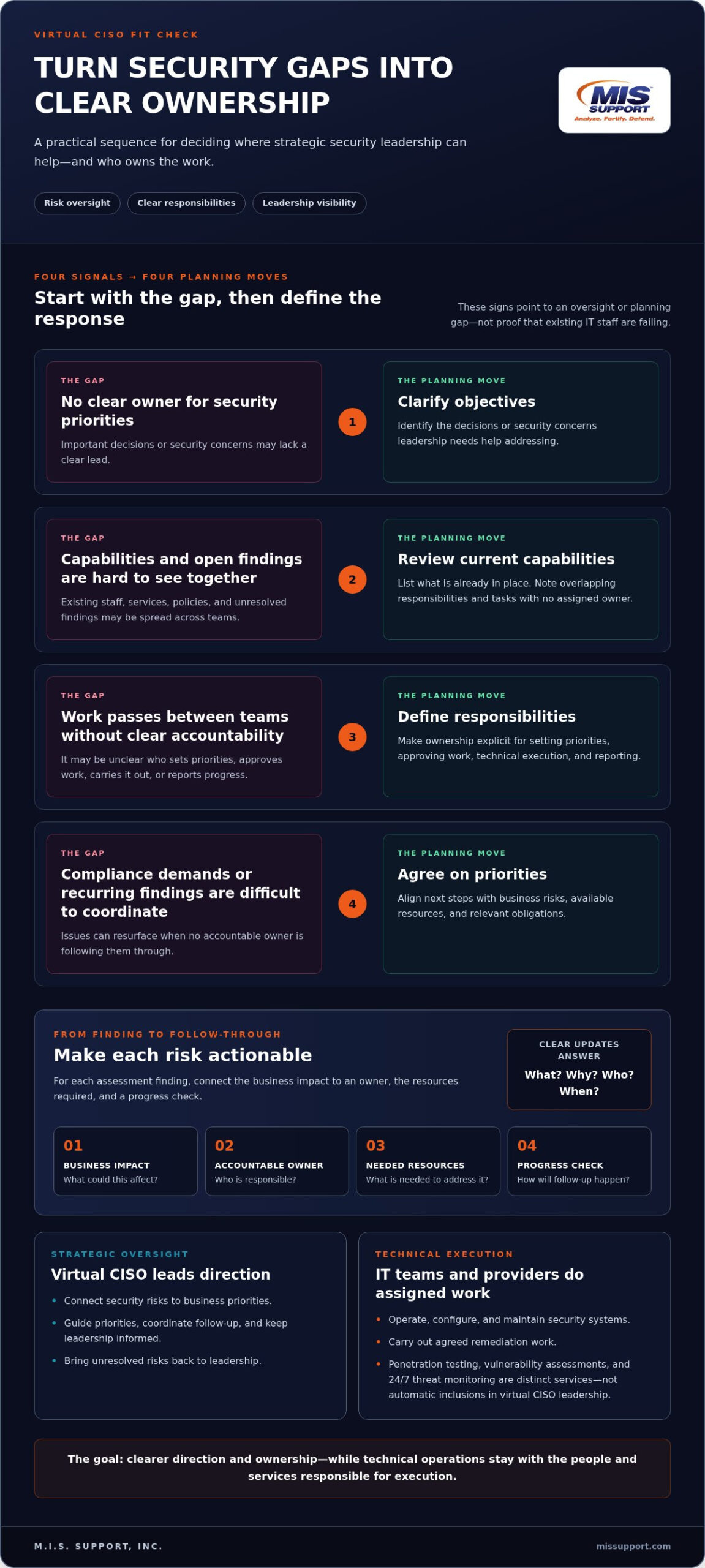
A business may benefit from strategic security leadership when no one clearly owns cybersecurity priorities, compliance demands are becoming harder to coordinate, or assessment findings keep resurfacing without an accountable owner. These signs point to a planning or oversight gap, not proof that existing IT staff are failing. A virtual CISO can help clarify direction while working alongside the people responsible for technical operations.
Before exploring the role, use this fit check:
- Clarify objectives: Identify the decisions or security concerns leadership needs help addressing.
- Review current capabilities: List existing staff, services, policies, and open findings. Note where responsibilities overlap or no owner is assigned.
- Define responsibilities: Decide who sets priorities, approves work, carries it out, and reports progress.
- Agree on priorities: Align next steps with business risks, available resources, and relevant obligations.
How a virtual CISO works with IT and security providers
A virtual CISO can help set priorities, coordinate follow-up, and make sure the right people understand their responsibilities. Internal IT staff or specialist providers then perform the technical work assigned to them. The arrangement should make ownership clearer, not create another layer of uncertainty. When evaluating the scope, ask how the role will coordinate with existing teams, how open issues will be tracked, and which tasks remain with IT or other providers.
If you’re assessing what does a virtual ciso do for your organization, review the scope of virtual CISO services and consider how they may fit alongside managed cybersecurity services. M.I.S. Support offers both. Comparing your objectives and current setup with the proposed responsibilities can help you decide whether strategic leadership is a suitable next step.
Make Security Leadership Part of the Plan
Knowing what does a virtual ciso do helps clarify where strategic oversight ends and hands-on security work begins. A virtual CISO can align security priorities with business risk, help assign ownership, and keep leaders informed. The right fit depends on whether your organization needs clearer direction, stronger follow-through, or support coordinating existing teams.
M.I.S. Support offers virtual CISO services alongside related offerings such as cybersecurity monitoring, penetration testing, vulnerability assessments, and compliance and risk management. These services have distinct scopes, so confirm what’s included in an engagement rather than assuming technical operations come with strategic leadership.
Start by listing the security decisions that lack a clear owner and the findings that need follow-up. Then contact M.I.S. Support to discuss your cybersecurity objectives and virtual CISO needs.
Frequently Asked Questions
What does a virtual CISO do day to day?
A virtual CISO’s day-to-day work centers on recurring security oversight, not a fixed checklist. The question “what does a virtual ciso do?” can be answered through tasks such as reviewing risk updates, prioritizing open issues, coordinating with leaders and technical teams, and reporting progress or decisions needed. Exact tasks, communication cadence, and deliverables vary by engagement.
Does a virtual CISO replace an IT team?
No. A virtual CISO provides strategic security leadership, while an IT team typically handles technical operations such as maintaining systems and carrying out assigned changes. The CISO can work with internal staff to clarify priorities, responsibilities, and follow-up, but shouldn’t be assumed to perform implementation. Define how the role will collaborate with your team and which tasks remain with IT.
When should a business hire a virtual CISO?
Consider one when security ownership is unclear, compliance needs are increasing, or your organization struggles to prioritize risk and follow through on findings. These are indicators to assess, not automatic requirements. First identify the decisions or gaps that need attention, then review your current staff and services. This helps determine whether strategic leadership would address a real need.
Can a virtual CISO help with compliance and risk management?
Yes, a virtual CISO may help an organization assess risk, plan security priorities, and oversee compliance-related work. This can include helping leaders understand gaps and coordinate responsibilities across teams. The exact support depends on the engagement, and applicable regulatory requirements vary by organization. Confirm both the requested scope and relevant obligations rather than assuming every compliance task is included.